
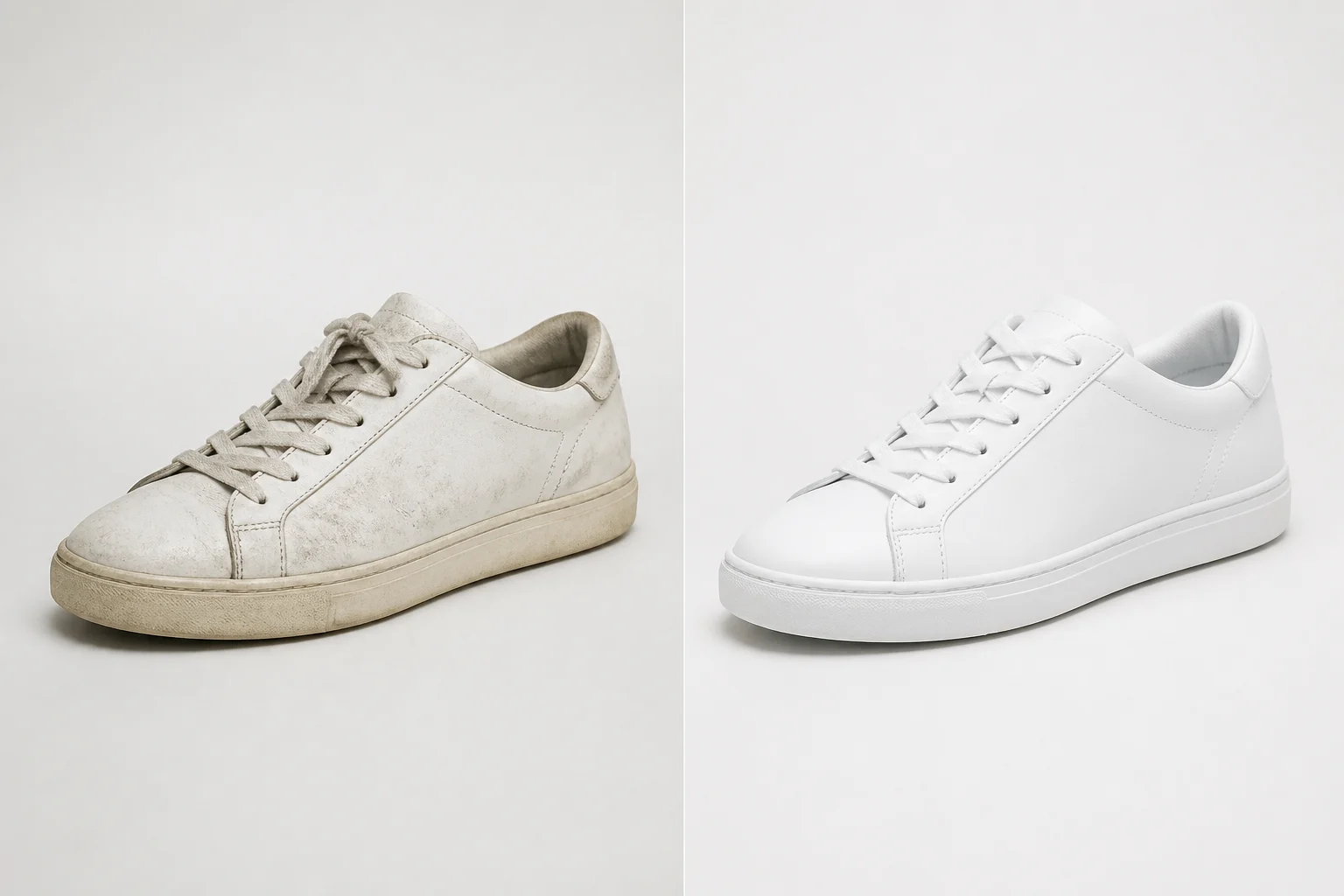
Cleaning your sneakers should make them last longer — not wear them out faster. But a surprising number of everyday habits, from the cleaner under your kitchen sink to how you dry your shoes afterward, can quietly damage materials, fade colors, and shorten the life of your favorite pairs. Here are five of the most common sneaker cleaning mistakes, why they happen, and exactly what to do instead.
Mistake #1: Using Harsh Household Cleaners
Dish soap, laundry detergent, bleach, and all-purpose sprays might seem like an easy fix when you’re out of dedicated sneaker cleaner, but they’re formulated for very different jobs. These products are often too aggressive for sneaker materials — they strip natural oils from leather, cause fading or yellowing on light-colored uppers, and weaken the glue that holds seams and soles together.
Fix: Use a pH-balanced sneaker cleaner made specifically for footwear. It’s designed to lift dirt effectively without breaking down the materials underneath.
Mistake #2: Scrubbing Too Hard
It’s tempting to attack a stubborn stain with elbow grease, but aggressive scrubbing — especially with a stiff brush or scouring pad — can scratch leather, fray fabric, and crush the delicate nap on suede or knit uppers. Once that texture is flattened or torn, it usually can’t be restored.
Fix: Use a soft-bristle brush matched to the material (soft for uppers, firmer only for outsoles) and clean in gentle, circular or back-and-forth motions. Let the cleaning solution do the work instead of relying on pressure.
Mistake #3: Drying Sneakers with Heat
Tossing damp sneakers in the dryer, propping them near a heater, or leaving them in direct sunlight might speed things up, but heat is one of the fastest ways to ruin a shoe. It can melt adhesives, shrink materials, warp the shape, and cause yellowing on white soles and uppers.
Fix: Always air-dry sneakers at room temperature, away from direct heat and sunlight. Stuff them with paper or a shoe tree to help them keep their shape and dry evenly, and remove laces and insoles first so everything dries fully.
Mistake #4: Using One Product for Every Material
Not all parts of a sneaker — or all sneakers — need the same treatment. Uppers, midsoles, and outsoles get dirty in different ways, and materials like suede, mesh, leather, and rubber each respond differently to moisture and cleaning agents. Using a single all-purpose product (or the same brush) across every surface can mean under-cleaning some areas and damaging others.
Fix: Match your tools to the material. Use a foam-based cleaner for knit and mesh uppers to avoid over-wetting them, a dedicated suede brush and suede eraser for suede or nubuck, and a firmer brush reserved just for outsoles. A well-stocked sneaker cleaning kit with multiple brush types makes this easy to keep straight.
Mistake #5: Skipping the Soles and Small Details
Most people focus entirely on the uppers and forget the outsoles, midsoles, and laces — but dirty soles and grimy laces can make an otherwise clean pair look neglected. Ground-in dirt left in outsole treads and yellowed laces are two of the most common giveaways of an incomplete clean.
Fix: Remove the laces and clean them separately (or replace them if heavily stained), and give the outsole a dedicated scrub with a firmer brush and foam cleaner to lift dirt from the treads.
A Quick Reference: What to Do Instead
| Mistake | Do This Instead |
| Harsh household cleaners | Use a pH-balanced sneaker cleaner |
| Scrubbing aggressively | Gentle motions with a soft brush |
| Heat drying | Air dry at room temperature |
| One product for everything | Match tools and cleaners to each material |
| Ignoring soles and laces | Clean outsoles and laces separately |
Frequently Asked Questions
How often should I clean my sneakers? For sneakers worn regularly, a light wipe-down or spot clean every week or two, plus a deeper clean every few weeks, is usually enough to prevent dirt from setting in.
Can I put my sneakers in the washing machine? Most sneakers aren’t designed for machine washing — the tumbling motion, water pressure, and heat from drying cycles can warp shapes, damage glue, and shrink materials. Hand-cleaning with the right tools is almost always the safer choice, especially for suede, leather, or knit uppers.
Why do my white sneakers keep turning yellow? Yellowing is most often caused by heat exposure (direct sunlight or a dryer), old cleaning residue left on the material, or oxidation over time. Air-drying away from direct light and fully wiping away cleaner residue after each clean can significantly slow this down.
Is it okay to use the same cleaner on suede and leather? No — suede and leather need different care. Suede should never be soaked and is best treated with a dry suede brush and eraser, while leather can typically handle a damp cloth and leather-safe cleaner. Using a suede product on leather (or vice versa) can leave residue or damage the finish.
Final Thoughts
Most sneaker damage isn’t caused by everyday wear — it’s caused by well-meaning cleaning habits that do more harm than good. Swapping harsh chemicals for a proper sneaker cleaner, using the right brush for each material, and letting your shoes air dry naturally are simple changes that add years to your sneaker collection. A few extra minutes of care now means your favorite pairs stay looking fresh for a lot longer.